From Samples to Populations
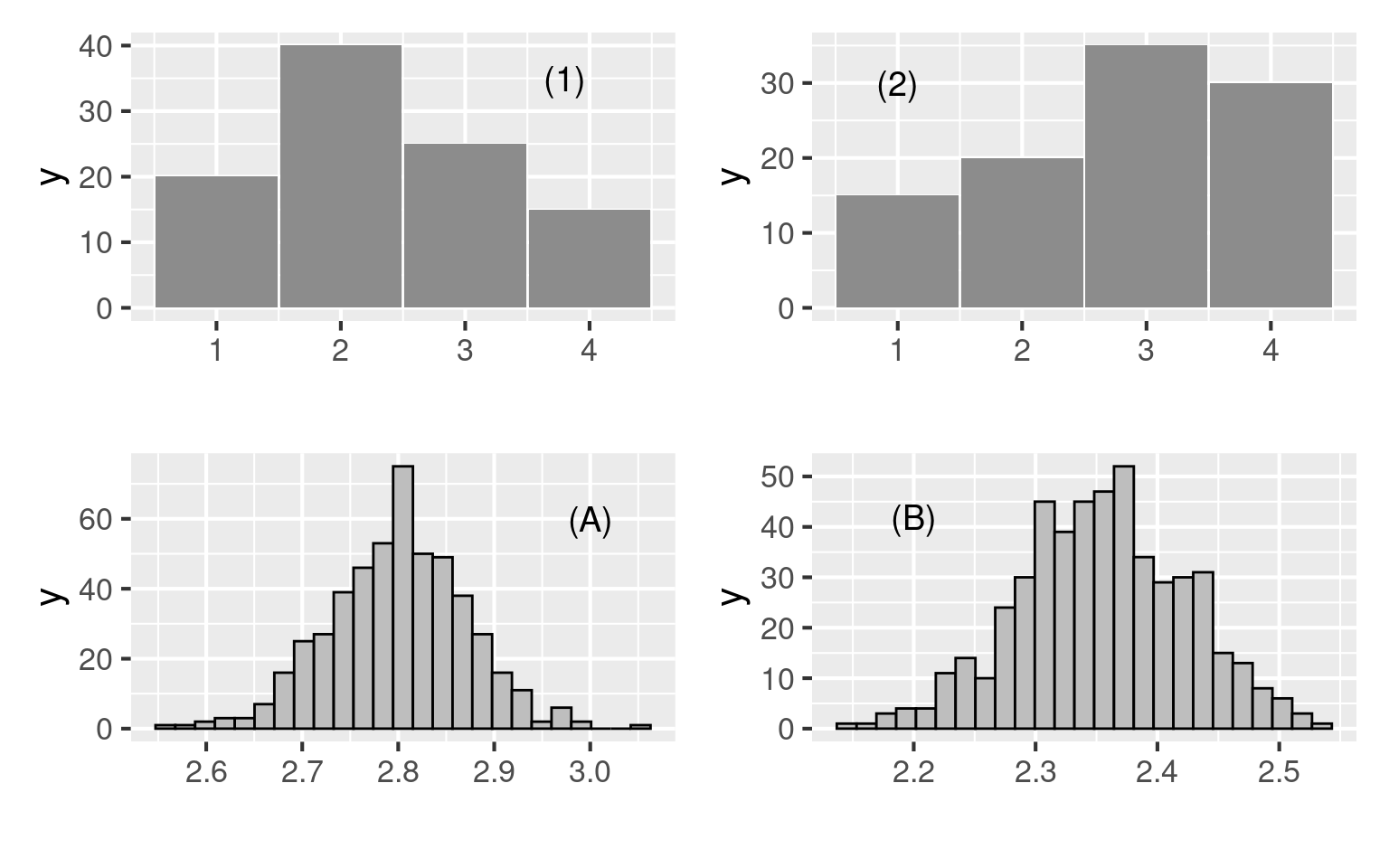
The top plots are population distributions; the bottom two are sampling distributions of the means from many samples of size 200. Match numbers to letters.
01:00
Scenario 1: Calling on the front row
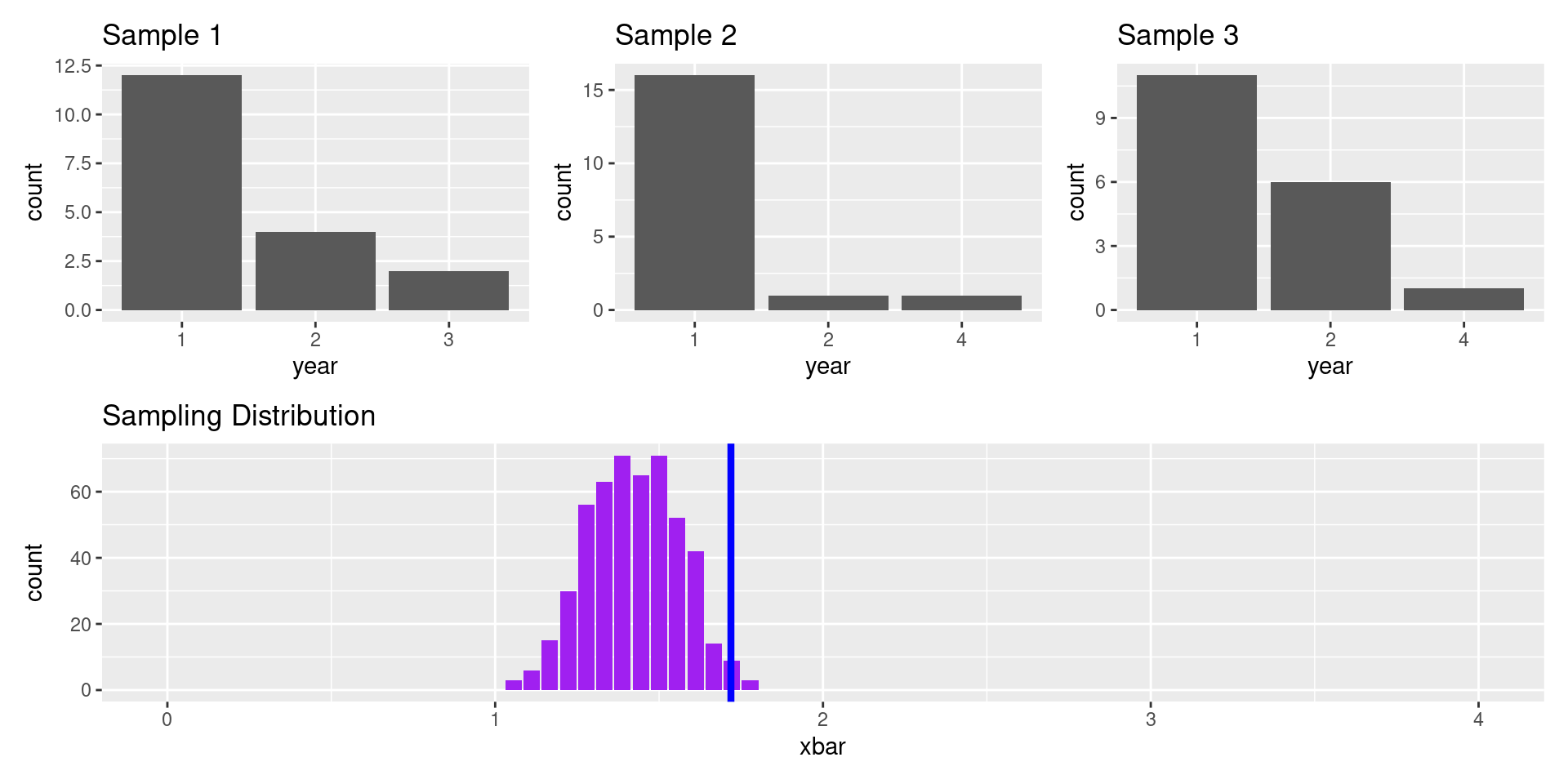
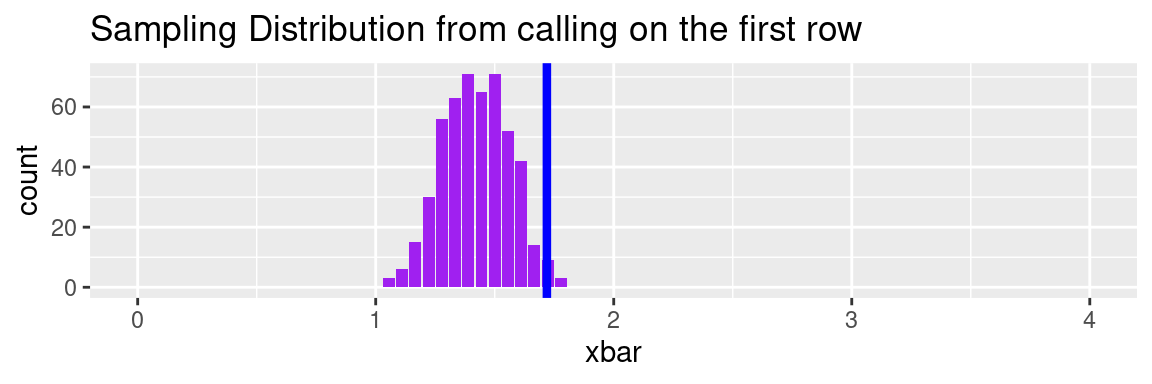
How would the sampling distribution change if instead of calling on the front row, the Prof. put all 527 names on tickets in a box, mixed them up, then drew 18 names without replacement? Select the most dramatic change.
01:00
Scenario 2: Drawing names from a box
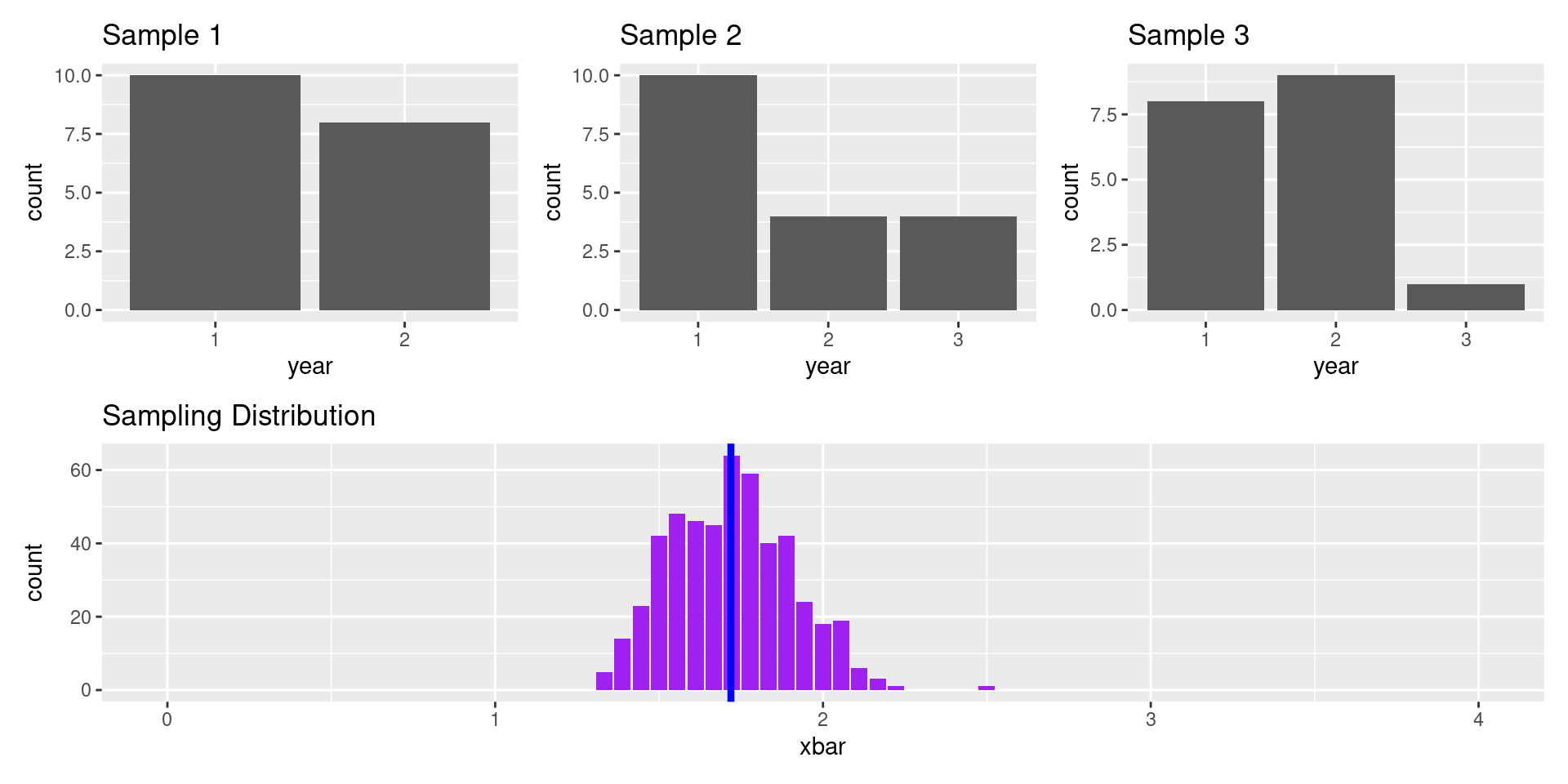

How would the sampling distribution change if, instead of drawing 18 names without replacement after mixing them up, the Prof. drew only 8 names without replacement after mixing them up?
Lab 8: People’s Park
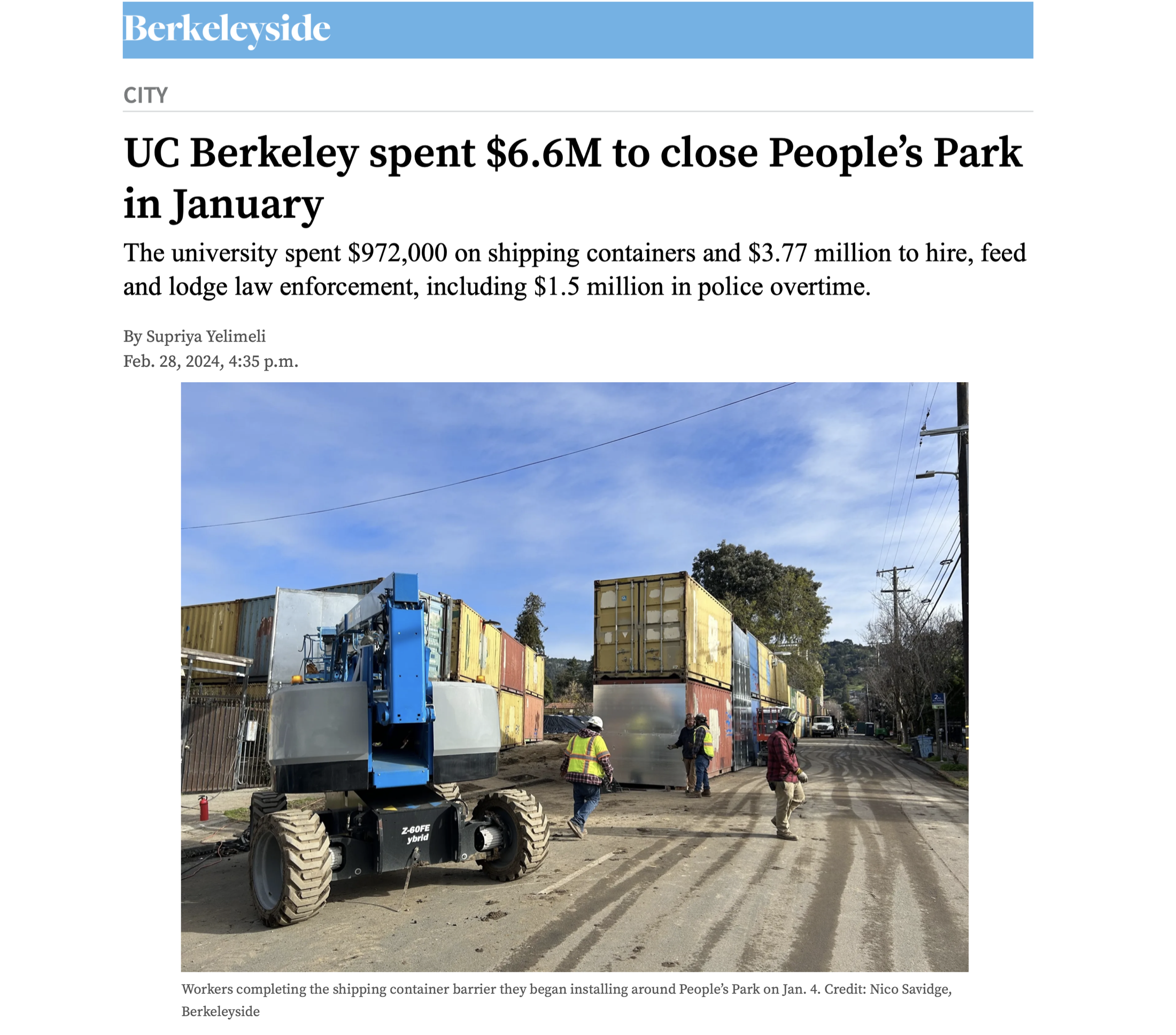
The Chancellor’s Survey
In fall of 2021, the Chancellor’s Office commissioned a survey of the Berkeley community to gauge opinions on people’s park.
In this lab you will gain access to this survey data.